The Dissolved Oxygen Detective: Why Lukewarm Water Isn’t a Rooting Shortcut
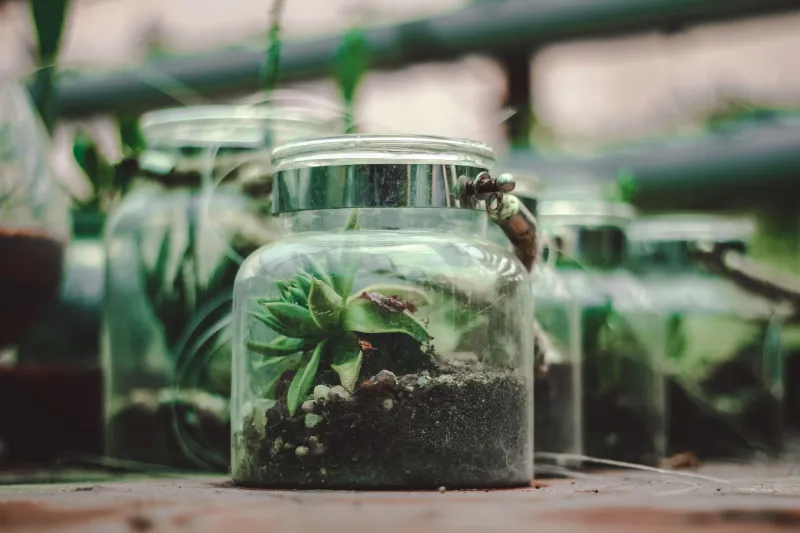
Every autumn, the same piece of propagation folklore does the rounds: use tepid water for cuttings. Not hot, obviously. Just warm enough to take the chill off. The logic sounds tidy — warmth speeds things up, so warm water should mean faster roots. But a cutting in a jar is not a seed tray on a heat mat, and water temperature does something rather specific to the oxygen inside it.
So I cleared a windowsill, took a tray of identical cuttings and ran a small November trial. Four weeks later, the lukewarm jar had not won. It had mostly just gone cloudy.
The setup: three jars, one tray of Tradescantia
I used Tradescantia zebrina, because it roots readily in water and is forgiving enough that any differences are less likely to be hidden by a sulk. From one vigorous plant I took 12 cuttings, each about 10cm long with two nodes and the lower leaves stripped. They were assigned to three treatments, four cuttings each:
- Cold tap: fresh from the mains, around 10–12°C in November.
- Room temperature: tap water left to stand until it reached roughly 19°C.
- Lukewarm: tap water warmed to about 30–32°C, which is a comfortably tepid bath rather than a kettle situation.
Each cutting went into its own small clear glass, with the same water volume and the same windowsill position. I rotated the jars daily so no treatment hogged the best light. Water was changed every third day, using water at the same treatment temperature. No fertiliser, no rooting powder, no bubbler. This was deliberately low-tech: the sort of thing most of us actually do.
It was a small trial, not a peer-reviewed study. Four cuttings per treatment tells you something useful about your own windowsill, not the final word on plant physiology. But it was enough to make me suspicious of the tepid-water shortcut.
What water temperature is actually doing
The key character here is dissolved oxygen. Cold water can hold more of it; warm water holds less. At around 10°C, fresh water can carry roughly 11mg of oxygen per litre at saturation. At 20°C that drops to about 9mg, and by 30°C it is closer to 7.5mg. Those are rough figures, but the direction is clear: warming water reduces the oxygen available to anything living in it.
That matters because a cutting is not dormant while it roots. Stem tissue is respiring, repairing wounds and building new cells. Roots themselves need oxygen. In compost, air pockets keep root respiration going even when the mix is moist. In a jar, the only oxygen is what is dissolved in the water and what diffuses in at the surface. A warm, still jar is therefore a slightly awkward place to ask a stem to build a root system.
Warmth does speed up metabolism. Chemical reactions generally run faster as temperature rises, and plant enzymes are no exception. But faster metabolism also means faster respiration and faster use of whatever oxygen is there. Meanwhile, warmer water encourages bacteria and fungi. The same conditions that nudge a cutting along can also nudge a soft stem towards rot.
Cold water does the opposite. It slows metabolism, which can make rooting look sluggish, but it also slows microbial growth and keeps more oxygen in solution. Room-temperature water sits in the middle: enough warmth to keep things moving, not so much that the jar turns into a stagnant soup.
The four-week results
The cold-tap cuttings were slow to start. For the first fortnight they looked exactly like sticks in water. But the stems stayed firm, the water stayed clear, and by day 21 tiny root initials were visible on three of the four. By day 28, all four had short but clean roots.
The room-temperature cuttings were the quickest off the mark. Root nubs appeared around day 12–14, and by the end of week four they had the most consistent root clusters. Nothing dramatic — this was not a jungle — but they looked settled and healthy.
The lukewarm cuttings were the fussy ones. One stem went soft at the base by day nine and had to be discarded. The water in that jar clouded faster than the others, even with the same three-day changing schedule, and I ended up refreshing it every other day. Two cuttings eventually produced roots, but they were shorter and fewer than the room-temperature group. There was no speed advantage at all.
Could the lukewarm water have helped in a colder room? Possibly. If your windowsill is sitting at 12°C and the water is 8°C, taking the chill off might make the cutting less stressed. But that is an argument for room-temperature water, not for a warm jar. There is a difference between removing a chill and actively heating the water.
The bottom-heat confusion
This is where the myth probably comes from. Bottom heat is a genuine propagation tool. Warmth at the root zone can encourage roots in compost, especially for tender cuttings in a cool shed. But bottom heat in compost is not the same as warm water in a jar. Compost has air spaces. A jar does not. Warming a jar raises the cutting's metabolic rate while reducing the oxygen available to support it. That is a very different bargain.
So the sensible version of the advice is not 'warm water makes cuttings root faster'. It is 'avoid icy water if it seems to shock soft tissue, and keep the water oxygenated'. In practice, that means cold tap or room-temperature water, changed regularly, in a clean jar.
The practical verdict for UK windowsills
For November propagation at home, I would skip the kettle. Cold tap water is fine. If you prefer, let it stand until it reaches room temperature — that also gives any chlorine a chance to dissipate, though chlorine is not the main issue here. Do not use water from the hot tap for plants, especially in older plumbing, and do not cook your cuttings at 35°C in the name of encouragement.
More useful habits:
- Change the water every two to three days, or sooner if it clouds.
- Rinse the glass and remove fallen leaves; rotting foliage is a bacterial party.
- Keep jars out of direct sun and away from radiators.
- Use clean secateurs and make the cut just below a node.
- Don’t submerge more stem than necessary — a few centimetres of water is plenty.
- If a stem goes soft or smelly, bin it before it affects the rest.
A thermometer is more useful than a kettle here. If the room is cold, room-temperature water is a reasonable compromise. If the room is warm, cool tap water is not a handicap. The real limiting factors in a UK November are light, hygiene and the condition of the cutting, not whether the water is 12°C or 19°C.
The takeaway
Tepid water is not a rooting hormone. It will not reliably speed up winter cuttings, and in a still jar it can make the oxygen situation worse while encouraging rot. My lukewarm jar did not root faster; it just needed more babysitting. In November 2026, the kettle stayed off, the room-temperature jar did best, and the cold tap came a close second. That is a result I can live with.