Banana Drama: Do Ripe Fruit Really Sabotage Winter Cuttings?
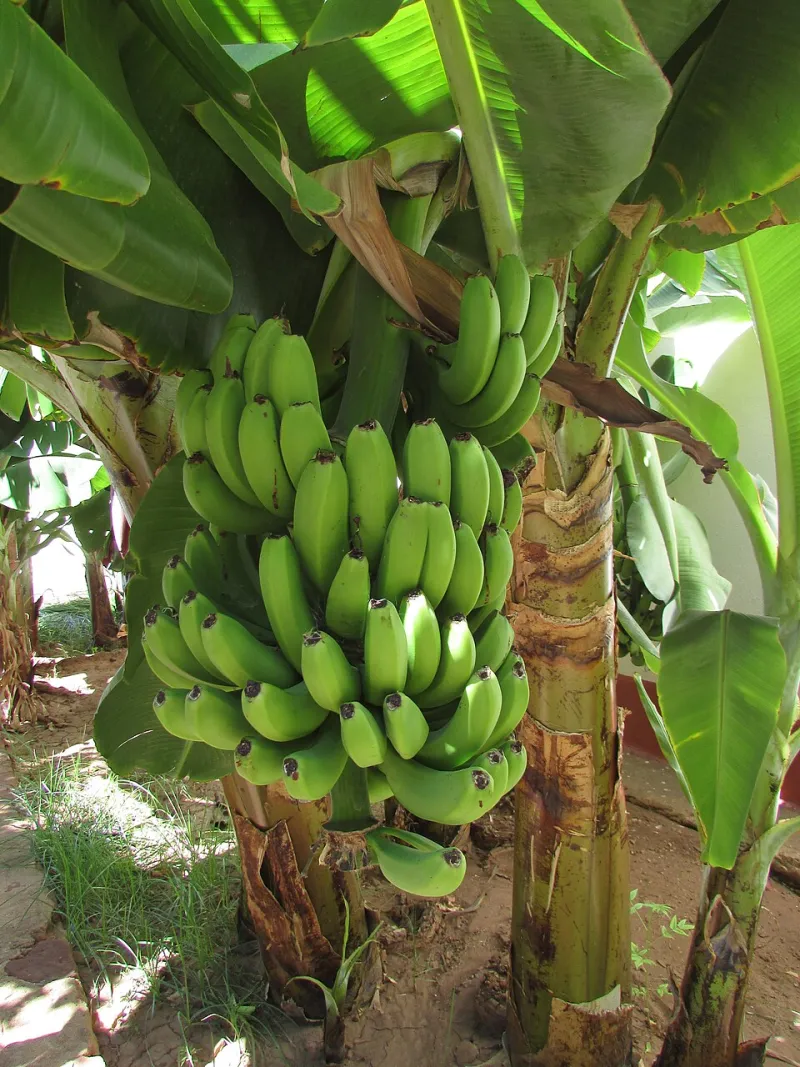
Photo: Kolforn (Kolforn) I'd appreciate if you could mail me ([email protected]) if you want to use this picture out of the Wikimedia project scope. This file is licensed under the Creative Commons Attribution-Share Alike 4.0 International license. Yo
Every November, someone on a gardening forum warns that ripe fruit will wreck your cuttings. The banana is usually the villain. Move it out of the room, they say, or your cuttings will yellow, drop their leaves and sulk. Ethylene is a real plant hormone, so the warning is not nonsense. But a fruit bowl in a UK living room is not the same as a sealed laboratory chamber. On 8 November 2026 I set up a small windowsill trial to see how much difference a ripe banana actually made.
The test
Ten fuchsia cuttings per group, all from the same plant, all with two nodes and no hormone powder. They went into identical 7cm pots of the same peat-free coir and bark mix. Group one sat in a clear plastic storage box with two ripe bananas in an open dish. Group two sat in an identical box with no fruit. Group three sat open on the windowsill, about 1.5 metres from the fruit bowl. All were in the same room, same light, same temperature, no bottom heat. I rotated the pots daily and checked leaf drop, callus and roots every three days for four weeks.
The banana box was the worst-case scenario: a warm, humid, still microclimate with a strong ethylene source. The open windowsill was the ordinary case: a banana in the room, but air moving and gas diluting.
What the banana did
| Group | Leaf drop by day 21 | First callus | First roots | Root score (0-5) | Notes |
|---|---|---|---|---|---|
| Banana box | 4/10 | day 8 | day 16 | 3 | More yellowing; heavy condensation; one cutting rotted |
| Empty box | 2/10 | day 8 | day 15 | 4 | Humid but clean |
| Open windowsill | 1/10 | day 9 | day 17 | 4 | Driest; no mould |
The banana did not stop rooting. That is the headline. The banana box had more leaf drop and one rotten cutting, but the empty box also produced two yellow leaves. The difference looked at least as much like humidity and stale air as ethylene. On the open windowsill, where a ripe banana was simply in the room, there was no meaningful gap in rooting.
What ethylene actually does
Ethylene is a gas. Plants make it, especially when wounded, ripening or stressed. Ripe bananas, apples and tomatoes release it too. It is involved in ripening, leaf senescence, abscission and responses to stress. It is not a poison that kills cuttings on sight. Concentration, enclosure and air movement decide whether it matters.
In an open room, air changes constantly and ethylene dilutes fast. In a sealed box, it accumulates. High ethylene can yellow leaves and trigger leaf drop, and it can affect root elongation. But cuttings also make their own ethylene as part of the wound response, and low levels are not automatically bad. The idea that a single banana across the room is sabotaging your propagation is a big leap from the science.
When to worry
Worry when cuttings are in a sealed propagator with ripe fruit, especially in a warm, still room. Worry if leaves are yellowing and dropping inside a closed box, or if condensation and mould are building up. Worry if you are storing a lot of ripening produce next to a small, enclosed batch of cuttings. In those conditions, ethylene is one more stress on top of high humidity and poor air exchange.
Do not worry about a banana on the other side of a living room. Ventilate instead. Open bags and propagator lids for ten minutes a day, remove yellowing leaves, keep temperatures steady and do not store fruit inside the propagator. If you are working with species known to be sensitive to ethylene, keep fruit separate as a sensible precaution.
The takeaway
The banana is a convenient scapegoat. In this trial, proximity to ripe fruit in an open room did not stop cuttings rooting. In a sealed box it added stress, but mostly alongside the conditions that already cause trouble: wet compost, stale air and low light. Move the fruit if it makes you feel better. Ventilate the propagator because that actually matters. And next time a cutting sulks, check the watering can before you blame the fruit bowl.